Introduction to CNC Milling Services in Modern Manufacturing
The manufacturing industry has experienced significant transformation with the advancement of computer-controlled machining technologies. Among these innovations, CNC Milling Services have become an essential solution for producing accurate, complex, and high-quality components across various industrial sectors. CNC milling uses computer numerical control systems to operate cutting tools with exceptional precision, allowing manufacturers to create detailed parts from materials such as metals, plastics, and composites.
Modern industries require components with tight tolerances, complex geometries, and consistent performance. Traditional machining methods often struggle to meet these demands efficiently. CNC Milling Services provide manufacturers with advanced capabilities that improve production speed, accuracy, repeatability, and overall product quality. From aerospace and automotive applications to medical equipment and industrial machinery, CNC milling technology plays a vital role in supporting modern engineering requirements.
Understanding the Working Process of CNC Milling Technology
CNC milling is an advanced machining process where computerized instructions control the movement of cutting tools to remove material from a workpiece. The process begins with a digital CAD model that defines the shape, dimensions, and specifications of the required component. This design is then converted into machine-readable instructions through CAM software, allowing CNC machines to perform precise cutting operations.
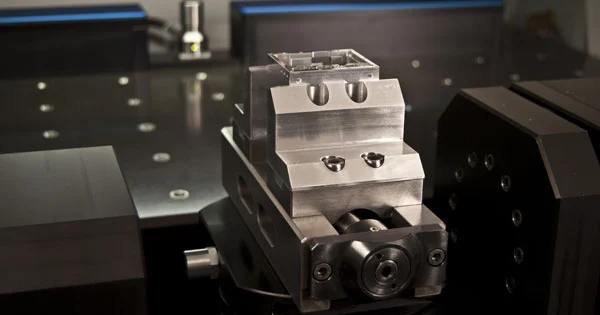
During the machining process, the workpiece is securely fixed on the machine table while rotating cutting tools remove material from different areas. Depending on the complexity of the component, CNC milling machines can operate along multiple axes, including three-axis, four-axis, and five-axis configurations. Multi-axis machining enables manufacturers to produce highly detailed parts with complex angles and intricate designs.
CNC Milling Services rely on advanced software, automated tool changing systems, and precision control mechanisms to maintain consistent production quality. These features reduce human error and allow manufacturers to achieve reliable results even when producing large quantities of components.
The Role of Modern CNC Milling Services in Industrial Applications
Modern industries require customized solutions for developing specialized components. CNC Milling Services provide the flexibility needed to manufacture prototypes, small batches, and large-scale production parts. Their ability to handle complex designs makes them suitable for industries where accuracy and reliability are critical.
In the aerospace industry, CNC milling is widely used to manufacture lightweight structural components, engine parts, and precision assemblies. Aerospace manufacturers require materials that can withstand extreme conditions while maintaining performance standards. CNC milling technology allows engineers to create components with optimized designs and strict dimensional accuracy.
The automotive sector also benefits greatly from CNC Milling Services. Manufacturers use CNC milling to produce engine components, transmission parts, molds, and custom prototypes. The technology supports rapid product development by allowing engineers to test and refine designs before full-scale manufacturing.
Medical equipment manufacturers depend on CNC milling for producing surgical instruments, implants, and diagnostic equipment components. Medical parts often require exceptional precision and smooth surface finishes. CNC milling ensures that these products meet strict quality requirements while maintaining consistency throughout production.
Advantages of Using CNC Milling Services for Complex Manufacturing
One of the primary benefits of CNC Milling Services is their ability to achieve high levels of precision. Computer-controlled operations eliminate many inconsistencies associated with manual machining processes. This allows manufacturers to produce identical components repeatedly while maintaining strict quality standards.
Another major advantage is improved efficiency. CNC milling machines can operate continuously with minimal supervision, reducing production time and increasing output. Automated processes also allow manufacturers to optimize material usage, reduce waste, and improve overall cost efficiency.
Flexibility is another important feature of CNC milling technology. Manufacturers can quickly modify digital designs and produce different component variations without requiring extensive machine adjustments. This makes CNC milling ideal for industries that require customized products and rapid design changes.
CNC Milling Services also support complex geometries that are difficult or impossible to achieve through traditional machining methods. Advanced multi-axis machines can create curved surfaces, detailed patterns, internal features, and precise contours, providing engineers with greater design freedom.
Materials Used in CNC Milling Applications
CNC milling technology can process a wide range of materials, making it suitable for diverse industrial applications. Metals such as aluminum, stainless steel, titanium, brass, and copper are commonly machined using CNC milling because of their strength and durability.
Aluminum is frequently used in aerospace and automotive applications due to its lightweight properties and excellent machinability. Titanium is preferred for demanding environments where high strength and corrosion resistance are required. Stainless steel components are commonly used in medical, industrial, and food processing equipment because of their durability and resistance to harsh conditions.
In addition to metals, CNC Milling Services can also work with engineering plastics and composite materials. Materials such as ABS, nylon, PEEK, and carbon fiber composites are often used for prototypes, electronic components, and specialized industrial parts.
How CNC Milling Supports Product Development and Innovation
Product development requires efficient methods for transforming ideas into functional components. CNC Milling Services provide engineers and designers with a reliable way to create prototypes and test new concepts before mass production. Rapid prototyping through CNC milling helps companies identify design improvements, reduce development risks, and accelerate product launches.
Unlike some manufacturing methods that require expensive tooling, CNC milling allows direct production from digital designs. This reduces setup requirements and provides greater flexibility during the development process. Companies can experiment with different designs and make adjustments quickly without significant additional costs.
The precision offered by CNC milling also helps improve product performance. Engineers can create optimized designs with complex structures that enhance strength, reduce weight, and improve efficiency. This capability is particularly valuable in industries where performance and reliability are essential.
Quality Control and Precision Standards in CNC Milling
Maintaining consistent quality is a crucial requirement in modern manufacturing. CNC Milling Services incorporate advanced inspection techniques to ensure that finished components meet exact specifications. Coordinate measuring machines, digital inspection tools, and automated quality systems help verify dimensions, surface finishes, and overall accuracy.
Manufacturers often follow strict quality management procedures to ensure every component meets industry standards. This attention to detail is especially important in aerospace, medical, and automotive industries, where even minor errors can affect safety and performance.
Advanced CNC milling equipment combined with skilled engineering expertise enables manufacturers to deliver reliable components with exceptional accuracy. This combination of technology and quality control ensures that CNC milling remains a preferred solution for complex industrial manufacturing needs.
Future Developments in CNC Milling Technology
The future of CNC Milling Services is closely connected with automation, artificial intelligence, and smart manufacturing technologies. Modern CNC machines are becoming more intelligent, with features such as real-time monitoring, predictive maintenance, and automated process optimization.
Industry trends toward digital manufacturing and Industry 4.0 are increasing the demand for connected CNC systems. These technologies allow manufacturers to collect production data, improve efficiency, and reduce downtime. Artificial intelligence can analyze machining conditions and recommend adjustments to improve performance.
Five-axis CNC milling and advanced robotics are also expanding manufacturing possibilities. These innovations allow companies to produce increasingly complex components with faster production cycles and improved accuracy.
Conclusion
CNC Milling Services have become a fundamental part of modern industrial manufacturing by providing precision, flexibility, and efficiency for complex applications. From aerospace and automotive components to medical devices and industrial machinery, CNC milling technology enables manufacturers to produce high-quality parts that meet demanding performance standards.
With continuous advancements in automation, software integration, and machining capabilities, CNC milling will continue to support innovation across multiple industries. As businesses seek faster production, improved accuracy, and customized manufacturing solutions, CNC Milling Services will remain a critical technology shaping the future of precision engineering.
