Introduction: Beyond the Price Tag – Understanding the Value of Sustainable Yarns
In today’s global textile market, the question of price for eco-friendly yarns is no longer a simple matter of cost per kilogram. It is a complex inquiry into value, ethics, What Is the Selling Price of Eco-Friendly Textile Yarn? A Comprehensive Market and Pricing Analysis and long-term business sustainability. As consumer demand surges for transparency and environmental responsibility, brands and manufacturers are actively seeking to integrate recycled, organic, and bio-based fibers into their supply chains. However, navigating the price landscape for these materials can be challenging. The selling price of eco-textile yarns is influenced by a multifaceted matrix of factors: raw material premiums, certification costs, processing technology, economies of scale, and volatile market dynamics.
This guide provides an in-depth, data-driven analysis for international buyers, product developers, and sourcing professionals. We will move beyond generic statements to dissect the concrete cost components, present current market price ranges, and explore the strategic considerations that justify investment in sustainable yarns. By understanding the “why” behind the price, you can make informed decisions that align financial objectives with brand values and future-proof your supply chain.
Table of Contents
- Defining “Eco-Friendly”: A Spectrum of Sustainable Yarns
- Key Categories: Recycled, Organic, and Innovative Bio-Fibers
- The Cost of Verification: Understanding Certifications (GRS, OCS, Oeko-Tex)
- Deconstructing the Price: Key Cost Drivers in Sustainable Yarn Production
- Raw Material Sourcing and Premiums
- Specialized Processing and Technology
- Scale, Certification, and Compliance
- Current Market Price Analysis: Data and Benchmarks (2023-2024)
- Price Ranges by Fiber Type and Specification
- Comparative Analysis: Sustainable vs. Conventional Yarn
- Regional Production Cost Variations
- The Strategic Value Proposition: Justifying the Investment
- Risk Mitigation and Supply Chain Resilience
- Brand Equity and Market Access
- Total Cost of Ownership (TCO) and Long-Term Savings
- Practical Sourcing and Negotiation Strategies
- How to Evaluate Quotes and Specifications
- Building Partnerships with Suppliers like Glyarn
- Future Price Trends and Market Outlook
- Conclusion: Making Value-Driven Sourcing Decisions
1. Defining “Eco-Friendly”: A Spectrum of Sustainable Yarns
“Eco-friendly textile yarn” is an umbrella term encompassing several distinct categories, each with its own production pathway and cost structure.
- Recycled Yarns: Primarily made from post-consumer plastic waste (like PET bottles) or post-industrial textile waste.
- rPET (Recycled Polyester): The most established and scalable. Price is closely tied to the cost of bale bottle flakes and the energy-intensive recycling process.
- Recycled Cotton/Denim: Made from garment clippings or post-consumer textiles. Often involves mechanical shredding, which shortens fibers, leading to potential strength loss and higher waste, impacting cost.
- Organic Natural Fiber Yarns: Grown without synthetic pesticides or fertilizers.
- Organic Cotton: Requires certified seeds, crop rotation, and manual weed control, leading to lower yields (typically 20-50% less than conventional) and higher labor costs.
- Organic Wool, Linen, Hemp: Follow similar principles, with certification and lower-input farming raising base material costs.
- Innovative Bio-Based Fibers: Derived from renewable resources like wood pulp, algae, or agricultural by-products.
- Lyocell/Tencel™, Modal: Produced in a closed-loop solvent system. The advanced technology and wood pulp sourcing create a premium price point.
- PLA (Polylactic Acid): Made from fermented plant sugars (e.g., corn). Pricing fluctuates with agricultural commodity markets.
The Critical Role of Certification
Certifications like the Global Recycled Standard (GRS), Organic Content Standard (OCS), or Oeko-Tex Standard 100 are not free. They involve audit fees, transaction certificate costs for each order, and ongoing administrative overhead. These costs are embedded in the final yarn price but provide essential chain-of-custody verification that brands require.
2. Deconstructing the Price: Key Cost Drivers
Understanding what you pay for is crucial. The premium for sustainable yarn stems from several tangible factors:
- Raw Material Premium: Post-consumer PET flakes command a different price than virgin chips. Certified organic cotton fiber can carry a 15-30%+ premium over conventional cotton, depending on origin and season. Specialty pulps for lyocell are more costly than standard dissolving pulp.
- Specialized Processing: Recycling and cleaning post-consumer waste is energy and labor-intensive. Transforming short recycled cotton fibers into a spinnable yarn often requires blending with a carrier fiber (like recycled polyester), adding another material cost. The closed-loop systems for man-made cellulosics represent significant capital investment.
- Scale and Efficiency: While growing rapidly, the production volume for many sustainable yarns (especially novel bio-fibers) is still lower than for conventional polyester or cotton. This limits economies of scale, keeping unit costs higher.
- Certification and Compliance: The cost of third-party audits, supply chain mapping software, and dedicated sustainability staff within a spinning mill is factored into pricing.
3. Current Market Price Analysis: Data and Benchmarks
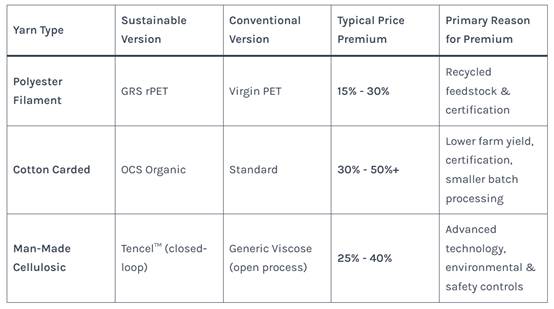
The following tables provide a snapshot of indicative price ranges. These are directional benchmarks and can vary significantly based on order volume, specification (yarn count), color, finish, and exact certification requirements. Prices are typically quoted in USD per kilogram or per pound.
Table 1: Indicative Price Ranges for Key Eco-Friendly Yarns (2023-2024)
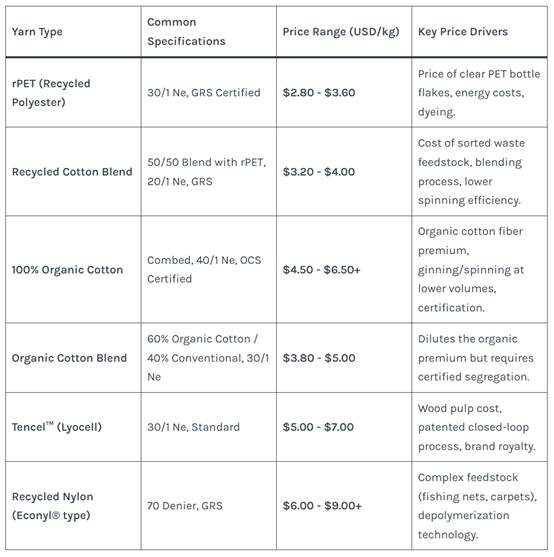
Table 2: Price Comparison: Sustainable vs. Conventional Yarn (Approximate Premium)
Regional Variations: Production hubs also influence price. Yarn spun in China may offer competitive base prices but with longer lead times and potential tariff implications for some markets. Turkish or Indian organic cotton yarn might have different cost structures. A supplier with integrated control from fiber to yarn, like Glyarn, can often optimize costs through vertical partnerships and provide more stable, transparent pricing.
4. The Strategic Value Proposition: Justifying the Investment
Viewing sustainable yarn only through a cost lens is a short-term approach. The premium buys significant strategic value:
- Risk Mitigation: Regulatory pressure on plastics and carbon emissions is increasing globally. Investing in recycled and low-impact materials future-proofs your products against legislation and potential taxes (e.g., carbon border adjustments).
- Brand Equity and Consumer Trust: Sustainability is a powerful brand differentiator. It can justify a higher retail price point, enhance customer loyalty, and meet the procurement mandates of major global brands and retailers.
- Supply Chain Resilience: Suppliers focused on sustainable materials, such as Glyarn, often invest in more transparent and traceable supply chains. This reduces the risk of reputational damage from environmental or social scandals.
- Total Cost of Ownership (TCO): While the yarn price is higher, sustainable materials can sometimes lead to savings elsewhere. For example, some brands report that fabrics made from certain high-quality recycled or bio-based fibers have better dye uptake or lower shrinkage, reducing waste in cutting and finishing.
5. Practical Sourcing and Negotiation Strategies
- Request Detailed Specifications: Always compare like-for-like. A quote for “recycled polyester” is meaningless without specifying GRS certification percentage, yarn count, luster, and finish.
- Ask for Transparency: Inquire about the origin of recycled feedstock or the farm groups supplying organic fiber. A reputable supplier should provide evidence of certification.
- Consider Long-Term Partnerships: Instead of one-off spot buying, engage in forward contracts or partnership agreements with a technical supplier like Glyarn. This can secure better pricing, ensure priority access to limited materials (like premium organic cotton), and foster collaborative development of new sustainable yarns tailored to your needs.
- Calculate Beyond the Kilogram Price: Factor in potential efficiencies (e.g., lower dye use), marketing value, and compliance savings when evaluating overall cost-effectiveness.
Future Outlook: As technology improves and scale increases, premiums for mainstream sustainable yarns like rPET and organic cotton are expected to gradually narrow. However, innovation in next-gen bio-fibers will likely maintain higher price points due to R&D costs. Volatility in oil and agricultural commodity markets will continue to influence both conventional and sustainable yarn prices.
6. Conclusion: Making Value-Driven Sourcing Decisions
The selling price of eco-friendly textile yarn is indeed higher than that of conventional equivalents. However, this premium represents an investment rather than merely an added cost. It is an investment in verified material integrity, reduced environmental impact, enhanced brand reputation, and a more resilient supply chain.
The most sophisticated buyers are no longer asking, “What is the selling price?” but rather, “What is the value proposition and total cost of ownership?” By partnering with professional, transparent suppliers who can articulate this value—from the source of the raw material to the performance of the final yarn—businesses can navigate the sustainable sourcing landscape with confidence. In doing so, they transform an ethical choice into a competitive and commercially astute strategy for growth in the 21st-century marketplace.